September 2026
Static budget, rolling forecast, or both
By Winsome Anderson, CPA · Owner, W.A. Anderson CPA
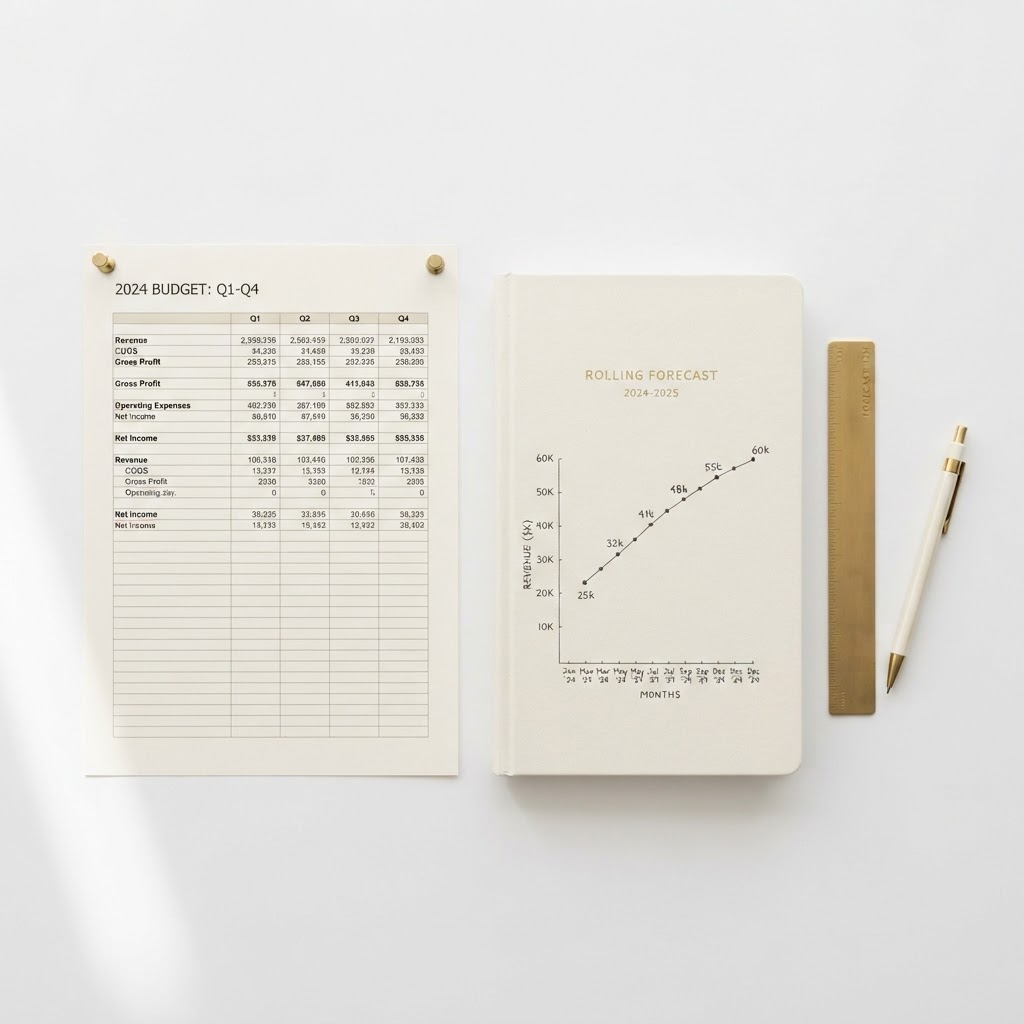
Boards keep the static target because the board approved it and the lender wants to measure against it. Operators run the month on a rolling forecast because last week's cash is more useful than last year's plan. The two are not in conflict. They answer different questions. The mistake is treating them as competing methods and choosing one. A healthy finance function runs both, shows them side by side, and lets each one do the job it is built for.
The static budget answers a question of discipline. Are we on track to the commitment we made? That commitment matters. The board voted on it. The lender measured against it. The management team is paid, in part, on holding it. The static budget is the line that says this is what we said we would do. It does not move when the month moves, and it should not. If it moved every time a number changed, it would stop being a commitment and start being an opinion. The static budget earns its keep by holding still.
The rolling forecast answers a question of reality. Given what just happened, what do the next twelve months actually look like? That question matters more to the operator than to the board, because the operator is the one who has to buy the inventory, set the prices, and make the hire in the month that is actually arriving. The rolling forecast moves every month because the month it describes has not happened yet. It absorbs the actual close and rolls forward a fresh twelve months. It is not a revised promise. It is a current expectation.
The conflict people imagine between the two comes from asking each one to answer the other's question. When the static budget is used to run the month, it breaks, because the month has already moved away from the assumptions behind it. When the rolling forecast is used to replace the board target, it breaks, because it moves and a commitment should not. The two tools are safe as long as each one is pointed at the question it was built to answer.
What this looks like on one page is two columns. On the left, the static budget for the year, with the variance to actuals. On the right, the rolling forecast for the next twelve months, with the change from last month's version noted. The board reads the left column and sees discipline. The operator reads the right column and sees reality. The lender reads both and sees a management team that knows the difference between a promise and a plan. That single page, updated every month, is one of the more underrated outputs of a finance function.
We update the rolling forecast every month from the actual close. It takes minutes because the books already closed. That is the point of a close you can trust: the forecast inherits it, and the conversation with your lender or board starts from numbers everyone believes. If the close takes three weeks and the forecast is built on top of it, the forecast is three weeks stale before it is finished. A fast, trusted close is not a vanity project. It is what makes the forward view current enough to act on.
There is a practical point about how often to roll. A rolling forecast that updates every quarter is a budget with a different cover. A rolling forecast that updates every month is a living document. The monthly cadence matters because it matches the cadence of the decisions. Pricing gets reviewed monthly. Hiring gets decided monthly. Cash gets watched weekly. A forecast that moves monthly is close enough to the ground to steer the company. One that moves quarterly is close enough only to describe it.
The rolling forecast also does something the static budget cannot. It shows the shape of the year. A static budget is twelve flat months with a total at the bottom. A rolling forecast shows the bend: the months where cash dips before it recovers, the quarter where the margin compresses, the window where the line of credit is most likely to be drawn. That shape is what an operator needs to see, because the shape is where the decisions live. The total at the bottom is a number. The shape is a plan.
Run both. Show them on the same page. Let the static budget hold still and do the work of discipline. Let the rolling forecast move and do the work of reality. The two together are the closest thing a finance function has to a dashboard for the whole company. One number will never give you that. Two numbers, pointed at two different questions, will.
A last note on ownership. The rolling forecast is not the controller's document. It is the operator's. The controller builds it, tests it, and makes it tie to the close. But the person who has to believe it, and act on it, is the one running the company. When the forecast lives only in the finance folder, it gets maintained and ignored. When it lives on the desk of the person who sets prices and signs offers, it gets used. The finance function's job is to make it current and credible. The operator's job is to make it matter. Both jobs have to be done, or neither one is worth doing.
There is also a question of what to roll forward. The honest answer is the whole income statement and the balance sheet that follows from it, but the part that earns its keep is cash. A rolling forecast that ends at net income is half a tool. The number that keeps the company alive is the cash balance at the end of each month, and that number depends on receivables, payables, the line of credit, and the timing of the big items that do not show up evenly. We roll the cash view alongside the income view, so the operator sees the month the bank account dips and can do something about it before the dip arrives. That is the forecast that gets read. The one that ends at net income is the one that gets filed.